Have you ever wondered how a tiny shift in an electron can spark huge changes? Scientists are calling these quick jumps "quantum leaps." It might sound wild, but these small shifts are now paving the way for new discoveries in physics (the study of matter and energy). Researchers mix old ideas with modern experiments, creating a friendly balance between theory and practice. Every little jump moves us closer to big steps forward and opens the door to bold insights about how our universe really works.
Quantum Leap Research Fundamentals: Foundational Breakthroughs in Quantum Physics

Back in 1913, Bohr told us that a quantum leap is when an electron suddenly jumps from one energy level to the next without passing through the space in between. Before scientists really understood atoms, Bohr’s idea about electrons taking these sudden jumps completely changed how we saw the tiniest parts of matter. This simple idea opened the door for future studies and challenged old ideas about how atoms are built.
Soon after, new breakthroughs emerged. In 1923, de Broglie suggested something amazing: particles like electrons can act both as tiny bits of matter and as waves (a wave is a moving ripple, like when you drop a pebble in water). This work helped set the stage for later discoveries, such as quantum entanglement (a kind of link where particles can affect each other even over long distances) by Einstein, Podolsky, and Rosen in 1935. Think about the photoelectric effect, too, which showed us that light can kick electrons off a surface to create electricity. And then there was Schrödinger’s wave equation, which gave us a new tool to see how quantum systems behave. It’s a bit like uncovering a secret rulebook that governs atoms.
These early ideas still guide today’s science. Researchers now run careful lab experiments and computer simulations that mimic these electron hops using modern detectors and models. This teamwork between theory and practice keeps pushing our understanding of quantum mechanics further.
Quantum Leap Research Experiments: Landmark Studies and Methodologies
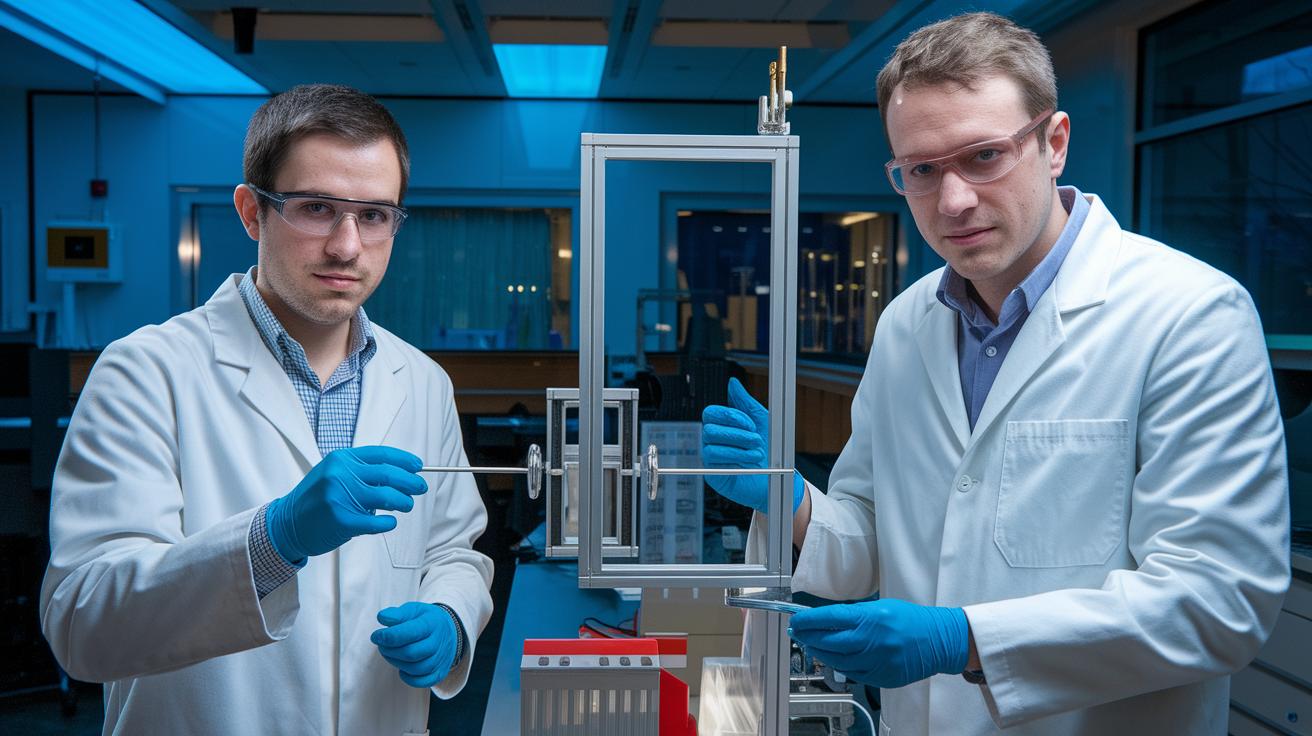
Carefully designed experiments are the heart of proving quantum theory. Across labs in our country, scientists work hard to test ideas that were once only written about in theory. Their tests help settle debates about the tiny world of particles and waves and show that the math behind quantum mechanics truly reflects how things work in real life.
Here are some key experiments:
-
Stern–Gerlach Spin Quantization Experiment
In this study, researchers measured the magnetic pull of particles. They discovered that atoms line up in clear, separate steps instead of moving in a smooth flow. -
Electron Double-Slit Interference Demonstration
Scientists sent electrons through two small openings. This test revealed that these tiny particles can create wave-like patterns. In other words, electrons can behave both as particles and as waves. -
Bell Test Experiments
These tests looked into whether particles can influence each other instantly even when far apart. The results supported the unique ideas of quantum mechanics that differ from our everyday experiences. -
Quantum Teleportation Between Superconducting Qubits
Researchers transferred quantum information between small circuit parts known as superconducting qubits (basic units for quantum computers). This breakthrough lays the foundation for more secure communication methods in the future. -
Macroscopic Superposition in Optomechanical Resonators
In these tests, larger objects were shown to exist in more than one state at the same time. This discovery may help us develop advanced quantum sensors and computers as we move forward.
These groundbreaking methods not only back up older theories but also set the stage for new research. Every experiment inspires the next wave of discovery, bringing us closer to fully understanding the fascinating world of quantum physics.
Quantum Leap Research Theoretical Frameworks: Computational and Mathematical Models

Quantum mechanics uses a few simple ideas that might surprise you. It starts with basic principles that say every particle has a chance of being in a certain state. Scientists describe these systems using something called Hilbert space, imagine a big room filled with all the possible states, each with its own chance of being true. This approach lets researchers predict how tiny particles will behave.
Next, scientists turn to statistical methods to deal with the uncertainty found in quantum systems. They use tools like density matrices, which work a bit like mixing different shades of color to create a new one, to represent systems with mixed parts. Then there are Monte Carlo simulations, where random sampling (kind of like rolling a dice over and over) helps estimate various outcomes. These methods make it easier to handle and understand the natural fuzziness of these studies.
Finally, experts use predictive models with computer programs to simulate energy level transitions. Digital experiments let them mimic electron jumps and test how well their models work in real life. This practical computational approach links theory to tangible results, deepening our understanding of how atoms behave.
Quantum Leap Research in Quantum Computing: Innovations and AI Integration
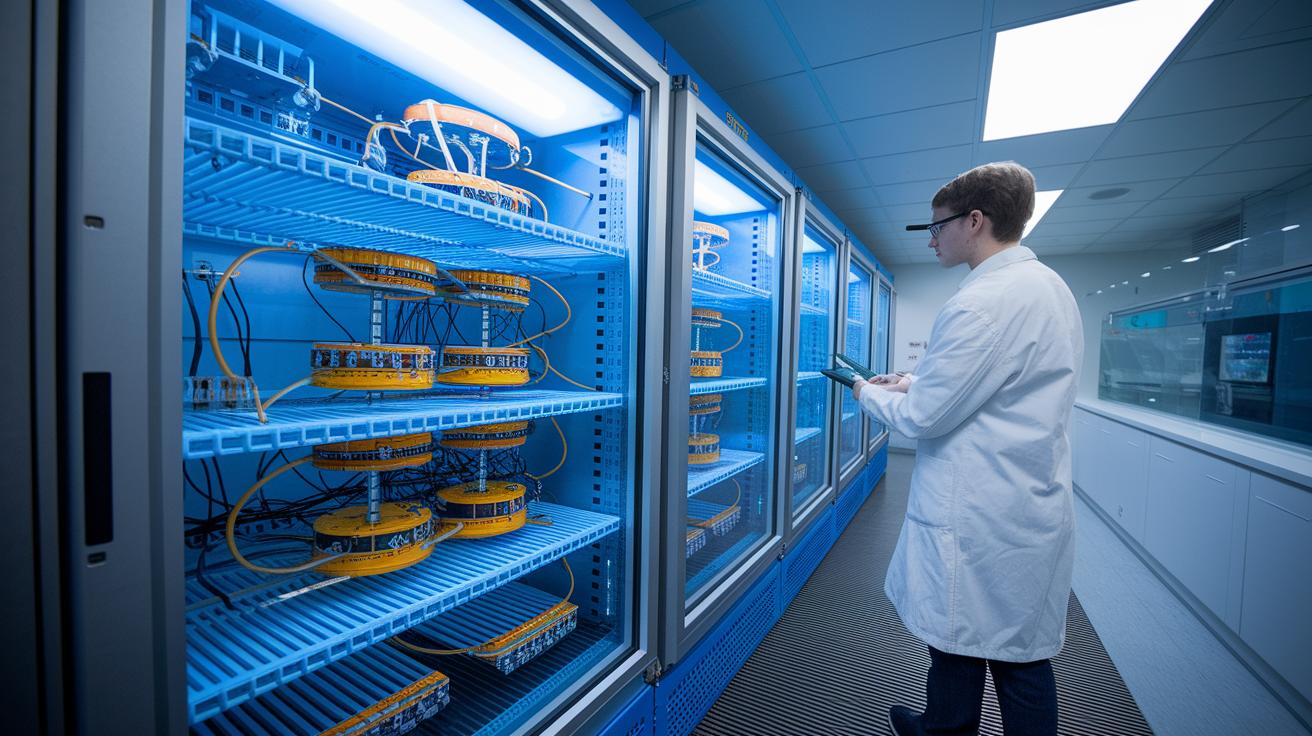
Recent developments in quantum hardware are moving us closer to a future where quantum computers help solve tricky problems. Researchers are busy designing superconducting qubits that stay stable for longer and using trapped-ion setups (tiny charged atoms controlled by electric fields) that allow for very precise control. These breakthroughs are changing our approach to computing, boosting both speed and dependability.
On the software side, smart machine learning tools are making a big impact. Experts are combining clever algorithms with quantum computing to fine-tune how these systems operate. They’re optimizing gate sequences (the step-by-step instructions that quantum computers follow) and improving error correction, much like the digital tweaks used in healthcare technologies. This means that quantum machines can adjust themselves automatically, cutting down on noise and enhancing overall performance.
Case Study: Quantum Supremacy Demonstration
Take Google’s Sycamore processor, for example. In October 2019, it completed a complex sampling task that regular computers couldn’t finish in any practical amount of time. This feat, known as sampling supremacy, proved that quantum algorithms can tackle challenges we once thought were impossible. Its performance continues to inspire fresh ideas in algorithm design.
Looking ahead, scientists are developing even smarter algorithms that blend automation with intelligent design. We’re likely to see an even closer marriage between machine learning models and quantum processors, which could revolutionize how industries solve tough computational problems. Researchers are also exploring hybrid models that merge classic computers with quantum chips, pushing the limits on speed and precision. This exciting mix is set to change the way we think about problem solving in a big way.
Quantum Leap Research Applications: Biomedical and Healthtech Advances

Quantum sensors are now changing how we look inside the body. They work in ways that standard scanners can’t, picking up tiny details that might otherwise hide. Imagine a scanner that catches small shifts in tissue, a little clue that helps doctors spot a problem early. This technology delivers crystal-clear images fast, giving healthcare teams a better view of your health.
Quantum-assisted molecular simulations are also shaking things up in drug research. Scientists use these powerful simulations to see molecules behaving as if they were arranging a huge jigsaw puzzle. One simulation might predict how a new drug interacts with a protein before it’s ever trialed in a lab. This approach reduces guesswork and speeds up the process of getting promising treatments to patients.
Secure quantum cryptography is stepping in to protect our digital health records too. With more patient data stored electronically, keeping that information safe is a top priority. Think of these quantum techniques as a high-tech lock that secures your personal details, ensuring that treatment plans stay private. These innovations are key to new platforms in precision healthcare and are helping build a safer, more reliable healthtech environment.
Quantum Leap Research Career and Funding Landscape: Opportunities and Case Study
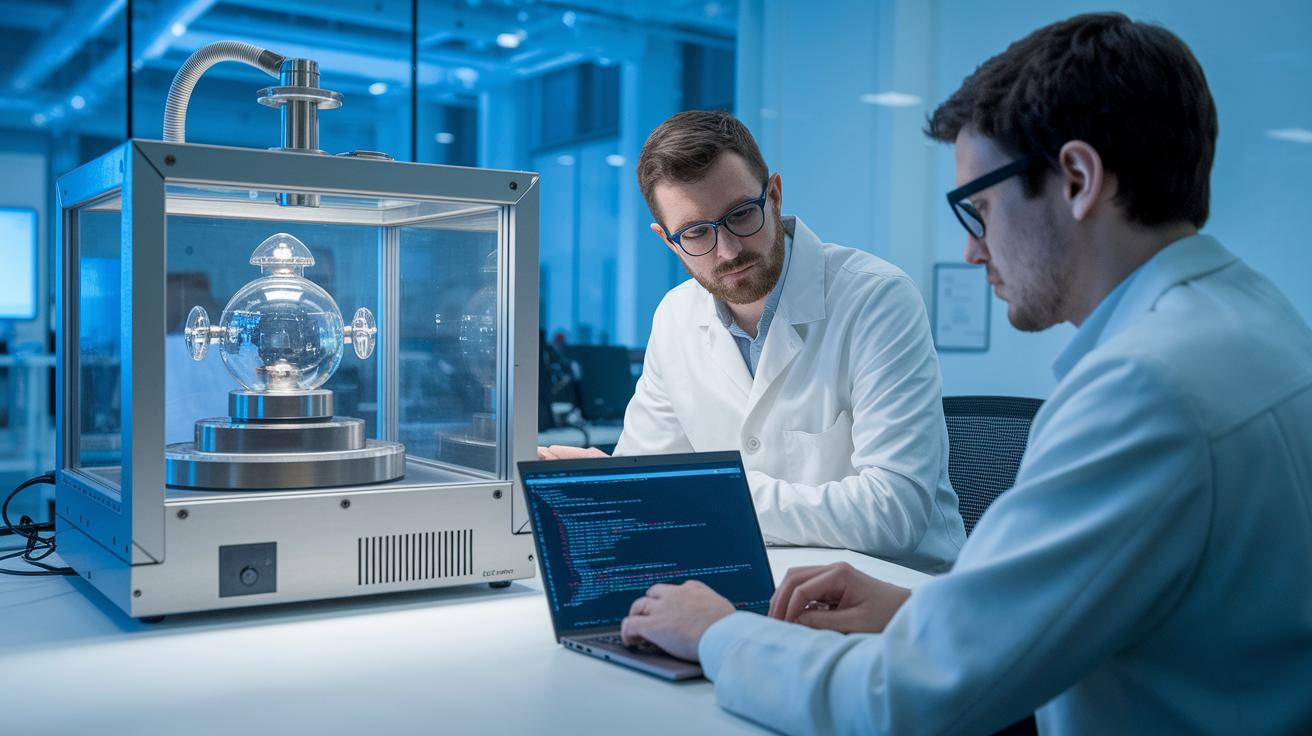
More and more people are discovering exciting opportunities in quantum research. For instance, an experimental physicist spends time in the lab testing new ideas about tiny particles, while a quantum software engineer builds coding tools for advanced computing tasks. Meanwhile, a computational modeler runs simple simulations to predict how energy changes, linking classroom learning with real-world work.
Grant programs also play a big role in these career paths. Money from groups like the National Science Foundation (NSF) and the Department of Energy Office of Science helps support studies that challenge what we know about the quantum world. In addition, projects backed by venture funds invest in pushing technology further. Together, these efforts create a strong research community where both academic teams and companies can innovate side by side.
Case Study: Corporate R&D Infrastructure
One clear example is from Quantum Leap Research, LLC. On June 26, 2019, they leased 9,000 square feet at Leesburg Tech Park. Danny Foit from St. John Properties along with CBRE experts Meredith LaPier and Brad Davis made this deal happen, setting up a lively research and development hub. This fall, the company plans to move into a new 41,000 square foot headquarters, showing how smart real estate choices can boost big projects.
New ways of working together across different fields are also making an impact. Teams made up of physicists, engineers, and computer experts join forces to solve tough problems, and sharing research openly keeps the work clear and trustworthy.
Final Words
In the action, we explored breakthroughs in quantum leap research, from early atomic models to state-of-the-art experiments and computational theories to applications in healthtech and funding strategies.
Each section highlighted key milestones, innovative methods, and promising opportunities that shape our understanding and future of quantum physics.
This snapshot reminds us that today’s discoveries build the foundation for tomorrow's advances.
Keep embracing the excitement and potential of quantum leap research as it paves the way for more transformative innovations.
FAQ
What do quantum leap research reviews say?
The quantum leap research reviews highlight both the latest experimental validations and theoretical breakthroughs. They provide insights into subatomic behavior and quantum computing trends based on decades of scholarly assessments and landmark studies.
Who owns quantum leap research?
The quantum leap research ownership involves corporate entities managing partnerships. Details such as key leadership and foundational investments are often disclosed during strategic developments, with affiliated professionals contributing to the overall management.
How do quantum leap research careers work?
The quantum leap research careers offer roles like experimental physics, quantum software engineering, and computational modeling. Professionals benefit from interdisciplinary projects, grant-funded initiatives, and collaborative opportunities within advanced scientific research environments.
What is the significance of quantum leap research in Leesburg, VA?
Quantum leap research in Leesburg, VA is marked by their lease of a 9,000 sq ft office at Leesburg Tech Park and upcoming plans for a 41,000 sq ft headquarters, underscoring their regional commitment to innovation and infrastructure development.
How can I find Quantum Leap Research LLC’s phone number?
The quantum leap research LLC phone number isn’t widely published online. For direct contact, consider checking their official website or reputable corporate directories to connect with their administrative team.
What does quantum leap research freebsd involve?
The quantum leap research freebsd integration focuses on using this robust operating system for complex computational tasks in quantum studies. FreeBSD’s open-source reliability and security are beneficial for high-performance scientific computing.
Who are Quantum Leap Partners?
The quantum leap partners refer to collaborative groups that support interdisciplinary projects in quantum research. These partnerships mix expertise from multiple fields, boosting innovation and applying advanced computational methods to emerging studies.
How does Quantum Leap AI integrate with research?
The quantum leap AI integration uses machine learning techniques to optimize quantum algorithms. This blend of AI and quantum computing enhances model simulations, error correction, and overall high-performance algorithm development for future technology breakthroughs.