Have you ever noticed that even a few minutes of slow, mindful breathing might change the way your body works? Research shows that mindfulness meditation is much more than a way to relax. Even short sessions can alter how your genes work, lower stress levels, and sharpen your focus. In early tests, people said they felt calmer and better prepared for daily challenges.
This article explains the science behind mindfulness meditation in simple terms. We explore how these practices create a sense of clear calm and share easy tips to help you incorporate mindfulness into your daily life for better balance and health.
Scientific Foundations of Mindfulness Meditation
Over the years, research has shown that mindfulness meditation really works. Studies since 1982 at a major medical center, involving more than 25,000 people, found that multi-week mindfulness programs help lower stress and improve how people handle long-term illnesses. In early trials, people described feeling calmer and better able to cope with life’s challenges after just a few mindfulness sessions. It’s a clear sign that these practices make a real difference.
A well-known Harvard study found that even a short, single session of meditation can change how our genes behave. It lowered genes connected to inflammation while boosting those that help keep DNA stable. In other words, a brief meditation session can lower blood pressure and stress hormone levels (cortisol), while also sharpening our focus and decision-making skills. These quick benefits explain why researchers are so interested in studying mindfulness meditation and its impact on both body and mind.
Other research shows that regular mindfulness practice changes our body in really positive ways. Even just a few minutes of meditation can reduce stress hormone levels and bring a sense of calm. Scientists have used different tools, from blood tests to behavior check-ups, to prove that mindfulness is a powerful way to lower stress.
Overall, the evidence is clear. Regular mindfulness meditation offers real benefits for our brain, emotions, and body. With improvements like reduced cortisol levels and better decision-making, the science behind mindfulness gives us a strong reason to make it a regular practice for better overall well-being.
Mindfulness Meditation: Brain Imaging and Neuroplasticity
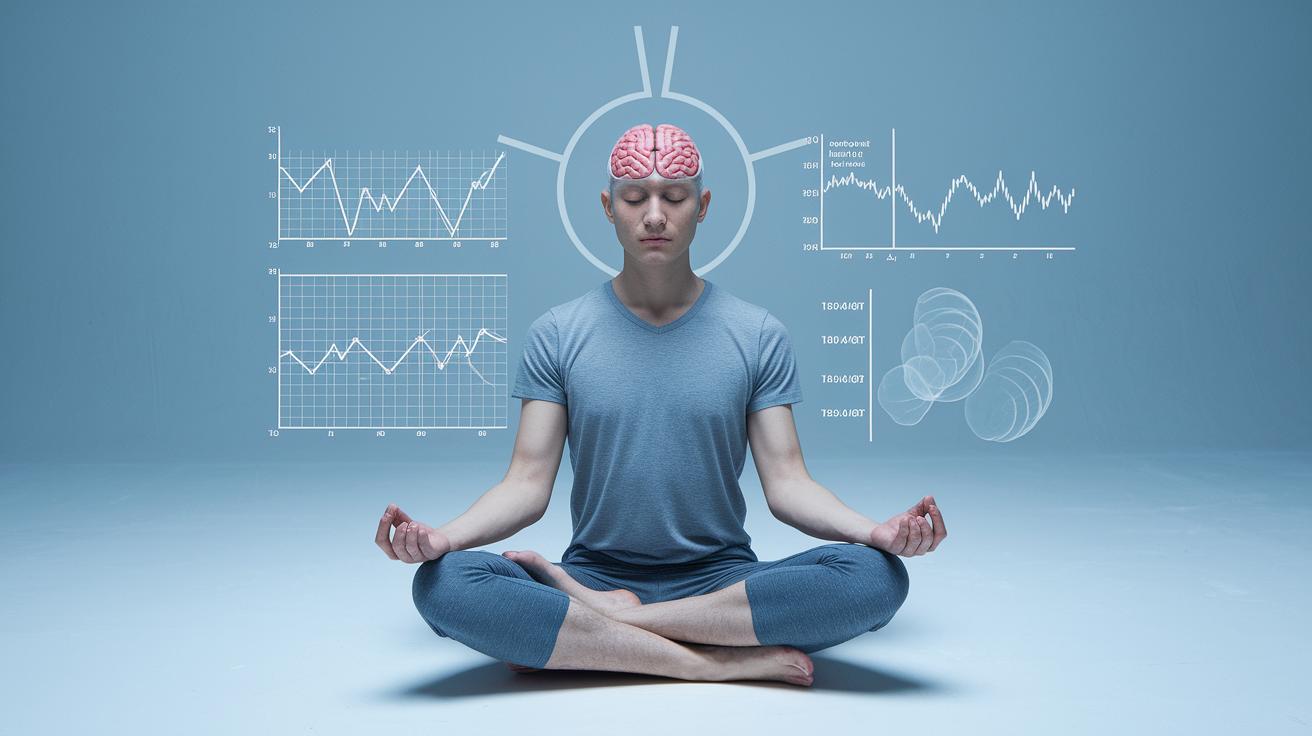
Research using brain scans shows that mindfulness meditation can really change how our brains work and even how they look. Studies using structural MRI, a type of scan that creates detailed images of the brain, find that regular meditation can boost the richness of gray matter in places like the hippocampus and prefrontal cortex. These parts are key for keeping your memory sharp, handling emotions, and making decisions. Think of it like building up your brain’s strength, much like how regular exercise builds muscle.
Functional MRI (fMRI) studies add more to the picture. They show that people who meditate a lot tend to have less activity in the default mode network, which is the part of the brain that makes you wander off into daydreams or self-focused thoughts. In short, meditation helps quiet that busy chatter, allowing you to feel more calm and focused.
EEG tests, which measure the brain’s electrical signals, back up these findings too. They reveal that during meditation, there’s a rise in alpha and theta waves, brain rhythms connected to relaxation and sharp focus. So it’s clear that meditation isn’t just about feeling peaceful; it actually makes your brain behave differently.
There’s even some evidence that regular mindfulness practice could guard against the normal changes that come with aging. Studies suggest that keeping up with meditation might help keep your brain functioning well as you get older. That’s one of the big reasons why many health experts encourage adding meditation to your daily routine.
| Imaging Modality | Study Reference | Key Finding |
|---|---|---|
| Structural MRI | Lazar et al., 2005 | Increased gray matter in hippocampus and prefrontal cortex |
| fMRI | Brewer et al., 2011 | Reduced default mode network activity |
| EEG | Cahn & Polich, 2006 | Higher power in alpha/theta waves during meditation |
Physiological Mechanisms in Mindfulness Meditation for Stress Reduction
Even a few minutes of mindfulness meditation can change how your body handles stress. Studies show that after short sessions, both the top and bottom numbers of your blood pressure can drop, and levels of cortisol (the stress hormone) can be lower. In eight-week mindfulness programs, people report feeling less stressed during the day and even show lower spikes in cortisol when they wake up. Researchers have also found that meditation can decrease markers in your genes that cause inflammation, which means it might help your body keep inflammation in check.
Breathing slowly and steadily during meditation is key to this process. It helps switch on the parasympathetic nervous system (the part of your body that helps you relax), making you feel calm and at ease. Think of slow, deep breaths as hitting a reset button when you start to feel your heart race. But if your breathing gets too quick, it can actually make you feel anxious, so it’s best to keep it slow and gentle. For more ideas on handling anxiety and stress, check out “Mindfulness Meditation for Emotional Regulation” or try reading “Stress Management Techniques for Anxiety.”
These findings show that mindfulness meditation can affect many parts of your body. By helping to balance your heart rate and hormone levels, a little bit of meditation can bring about a sense of calm and better overall health. Isn’t it amazing how such a simple practice can make a big difference?
Cognitive and Emotional Effects of Mindfulness Meditation

Cognitive Performance
Studies show that practicing mindfulness meditation can really clear your mind. It helps boost short-term memory, sharpens your focus, and makes it easier to shift between different thoughts. For example, research with adults between 55 and 75 found that regular mindfulness practice helped them perform better on tests like the Stroop test (a task that measures how well you can control and focus your attention). When your brain’s constant chatter calms down, you can make decisions quicker and with fewer mistakes. This is because mindfulness lowers the activity in the brain area that often leads to distracting, wandering thoughts.
If you’re curious to learn more, check out the detailed guide at Mindfulness Meditation for Focus. It shows how these meditation techniques can boost your everyday attention and memory while keeping you relaxed and alert.
Emotional Regulation
Mindfulness meditation isn’t just great for your thinking, it also helps manage your emotions. Research comparing mindfulness-based cognitive therapy (MBCT) with antidepressant treatments found that meditation can work just as well as medication in easing anxiety and depression. Some studies even report that regular practice can help keep these feelings at bay for up to 60 weeks.
When you ease down those repetitive, negative thoughts, you can handle stress better and build emotional strength. This calm approach not only lifts your mood but also helps you feel more connected to others. Over time, using mindfulness as a regular part of your routine can be a natural way to support your mental health and keep your emotions balanced.
science behind mindfulness meditation sparks calm clarity
Scientific studies show that organized mindfulness classes can make a real difference for both your body and your mind. For example, one eight-week course was linked to higher flu antibody levels, almost like giving your immune system a gentle boost. In another study, people living with HIV saw improvements in their immune markers after practicing mindfulness, a reminder that simple meditation can sometimes feel like a helping hand for your health.
Research on mindfulness-based cognitive therapy (MBCT) backs up these benefits even more. MBCT has helped many reduce the chances of depression coming back for nearly 60 weeks, results that are similar to using typical antidepressant medicines. This suggests that sticking with mindfulness might keep negative feelings at bay over time.
Mindfulness-based stress reduction has also shown great results when it comes to handling long-term pain. In one study with 282 people, participants felt quick relief from pain, and these benefits lasted up to 15 months after their course. And when it comes to sleep, groups that practiced mindfulness experienced much less severe insomnia compared to others. It’s pretty amazing how a few minutes of mindful breathing can lead to more peaceful nights.
Even in the busy world of work, mindfulness seems to have its perks. A 12-week course helped senior managers feel more confident and sharpen their leadership skills. This tells us that mindfulness isn’t just about feeling better physically and emotionally, it can also boost your performance at work. Overall, these studies offer strong proof that mindfulness meditation is a simple, yet powerful tool to help improve many parts of our lives.
Practice Guidelines for Mindfulness Meditation Integration

Even one short session of mindfulness meditation can change the way your genes work to help control inflammation. It's pretty amazing to think that just 10 minutes of quiet time could set off positive changes down at the cellular level. If you're just starting out, try a simple daily 10-minute routine, much like the Take10 program.
Experts often recommend meditating for 10 to 20 minutes each day, ideally five to seven days a week. Think of it like watering a plant every day, even small, consistent efforts build up over time. Regular practice helps your body slip into a state of calm, where slow, focused breathing nudges your "rest and digest" system (the part of the nervous system that helps you relax after stress) into action.
When you meditate, focus on deep, even breaths. For example, you can inhale slowly for a count of four, hold that breath for a count of four, and then exhale for another four counts. Quick, shallow breaths might make you feel uneasy rather than relaxed.
If you keep up this practice for about eight weeks, you'll likely notice even more benefits, both physically and emotionally. Have you ever noticed how little changes can make a big difference over time? Enjoy the journey to a calmer, healthier you.
Future Research Directions in Mindfulness Meditation Science
Mindfulness meditation research is shifting toward smart, data-driven methods. Scientists are now double-checking previous studies and using big-picture analyses to settle old debates. Early findings suggest that mindfulness apps could be game changers by offering on-the-go tracking and real-time feedback. These digital tools may soon help people fine-tune their meditation routines easily.
New ideas like biofeedback (using devices to measure things such as heart rate) and virtual reality setups are adding a modern twist to traditional meditation. Experts from neuroscience, behavioral science, and tech are coming together to build stronger, more practical research plans. Of course, we still need clear standards to measure progress and figure out the right “dose” of meditation so that everyone can enjoy lasting benefits.
More teamwork among doctors, tech developers, and meditation instructors could really boost these efforts. As research moves forward, blending digital metrics with personal insights might lead to simpler, more tailored mindfulness practices for all. Have you ever noticed how a small update can open up a whole new world of possibilities? This smart mix of technology and ancient wisdom is set to shape the future of meditation research with clearer results and practical benefits for everyday well-being.
Final Words
In the action, the blog explored rigorous research proving mindfulness meditation helps reduce stress, improve brain function, and boost immunity through real scientific studies.
Empirical studies and neuroimaging findings offer clear proof of its benefits, from lowering blood pressure to enhancing memory and attention.
The discussion on clinical trials and practice guidelines shows that even brief daily sessions make a real difference in quality of life.
Keep exploring the science behind mindfulness meditation and enjoy the steady improvements it brings to your well-being.
FAQ
What scientific facts support mindfulness meditation?
The science confirms that mindfulness meditation reduces stress markers like cortisol, lowers blood pressure, boosts immune function, and shifts brain activity, as shown in studies with thousands of participants.
What are the scientifically proven benefits of mindfulness meditation?
Research shows mindfulness lowers stress, sharpens attention, and improves emotional balance, with measurable improvements in memory and decision-making backed by clinical trials and imaging studies.
How does mindfulness meditation affect the brain and body?
Mindfulness meditation increases gray matter in the hippocampus and prefrontal cortex, regulates the autonomic system, and lowers inflammatory responses through changes in gene expression and neural connectivity.
How do I practice mindfulness meditation?
Start with daily 10-20 minute sessions focused on slow, deep breaths and present-moment awareness. Consistent practice activates relaxation pathways and can lead to lasting improvements in stress management and focus.
How do the 3 C’s and 5 R’s relate to mindfulness practice?
The 3 C’s typically refer to qualities like concentration, clarity, and compassion, while the 5 R’s offer a framework for noticing and handling thoughts or feelings mindfully; interpretations may vary by teaching.